





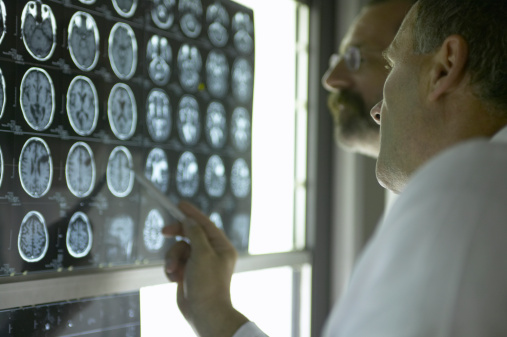
Ataxia Series: Neuroimaging patterns not to miss in ataxia



Prof. Orlando Barsottini: Hello and welcome to the MDS Podcast, the official podcast of the International Parkinson and Movement Disorder Society. I am Orlando Barsottini, professor of neurology at Federal University of Sao Paulo, Brazil. And I am here today with Dr. Malco Rossi. Malco is movement disorders neurologist at Fleni Institution in Buenos Aires, Argentina. And today we are discussing neuroimaging patterns not to miss in ataxia. Malco, t hank you for joining us.
View complete transcript
Dr. Malco Rossi: Hi Orlando. Thank you for having me.
Prof. Orlando Barsottini: Thank you, Malco. Malco, this is my first question for you, when you first review an MRI from patient with ataxia what are [00:01:00] the key elements you systematically evaluated in these patients?
Dr. Malco Rossi: The first thing I do is evaluate the cerebellum. I assess whether cerebellar atrophy is present and if so, whether it is global or follows a specific pattern such as predominant involvement of the vermis or the cerebellar hemispheres. I always examine the cerebellum in the axial, coronal, and sagittal planes.
So vermian atrophy and in particular, superior cerebellar vermis involvement can be especially helpful in the diagnostic process. In some patients, cerebellar volume appears normal on conventional imaging. So in these cases when available, T1 volumetric MRI can help confirm the absence of overt cerebellar atrophy or reveal mild volume loss. This is [00:02:00] particularly relevant because not all causes of ataxia shows cerebellar atrophy, especially in the early disease stages. So it is also very important to evaluate the cerebellar peduncles. Atrophy of the superior cerebellar peduncles can point to specific etiologies, and the superior, middle, and inferior peduncles may show T2 or flare hyperintensities that can be very informative in certain causes of ataxia.
So when cerebellar atrophy is present, it is often diffused and nonspecific, which limits the diagnostic value in clinical practice. For this reason, I then systematically assess for additional MRI abnormalities beyond cerebellum, like brainstem, basal ganglia, corpus callosum, and cortico regions. Other than atrophy patterns, I carefully look for [00:03:00] associated signal abnormalities, both hyperintensities and hypointensities that may provide important diagnostic clues, as well as any distinctive imaging features that point towards specific etiologies. So in other words, in patients with ataxia, the MRI evaluation should follow a structured pattern based approach rather than focusing only on the cerebellar volume.
Prof. Orlando Barsottini: Okay, M alco in everyday clinical practice cerebellar atrophy in cerebellar ataxias is often diffused and no specific. And now some of the most challenging cases are those where cerebellar atrophy is minimal and even absent. My question, which cerebellar imaging features do you find the most helpful in daily practice for [00:04:00] evaluation of these patients?
Dr. Malco Rossi: Cerebellar imaging signs that I find particularly helpful in daily clinical practice are the changes in these cerebellar peduncles. Middle cerebellar peduncle hyperintensities are a well-recognized feature of Fragile X associated ataxia syndrome and can also be seen in MSA type C. Also superior cerebellar peduncle hyperintensity is present in up to 60% of patients with SCA 27 B. This is a frequent cause of late onset ataxia, either sporadic or familial with typical features including onset after age 45, downbeat nystagmus, episodic worsening, and symptom exacerbation with caffeine. Of importance, SCA 27 B is a treatable cause of ataxia as many patients respond to 4-aminopyridine. So this [00:05:00] makes early recognition of this disorder very important.
Also, another point is that superior cerebellar vermis atrophy can be helpful. Even though this finding can be seen in some common causes of ataxia, such as Friedreich's ataxia, spinocerebellar ataxias, and also in alcoholic cerebellar degeneration. It is also a classic feature of ARSACS, particularly when associated with other typical MRI findings of ARSACS. Like the bilateral hypo intense pontine sections, and the enlarged pons. And as you mentioned, Orlando, many causes of ataxia show diffuse and non-specific cerebellar atrophy. And in some conditions, cerebellar atrophy may be minimal or even absent. Particularly in early disease stages, this kind of cure and Friedreich's ataxia.
Also in ataxia with vitamin E deficiency in adult onset [00:06:00] Alexander disease and in several hereditary spastic paraplegias that combine spastic paraparesis and the ataxia. In these cases, cervical spine MRI, to assess the for spinal cord atrophy can be very helpful. So for this reason, I routinely assess atrophy patterns beyond the cerebellum, including the brainstem, and basal ganglia. For example, combined atrophy of the putamen, pons, and middle cerebellar peduncles points to MSA type C while midbrain atrophy patterns are characteristic of PSP type C.
In addition to atrophy, signal abnormalities, including hyperintensities in the brainstem, spinal cord, basal ganglia, corpus callosum, inferior olive, or cerebellar white matter often provide critical diagnostic clues, particularly early in the disease course.
A classic example is the [00:07:00] hot cross bun sign. Which is highly specific for MSA type C within about 98 or 99% specificity, but its sensitivity is limited around 45 to 70. So of importance, this sign is not pathognomonic and has been reported in several other conditions, including many SCAs like SCA 34, as well as immune mediated or paraneoplastic, inflammatory, vascular, and infectious causes of ataxia. This overlap reflects shared pathophysiological mechanisms that include the degeneration of pontine neurons and transverse pontocerebellar fibers with relative sparring of the pontine tegmentum, and corticospinal tract. Also degeneration and gliosis has been reported.
And so given the broad list of differential diagnosis for the hot cross bun sign, [00:08:00] the presence of a hot cross bun sign needs a clinical correlation taking into account the age at onset, disease progression, predominant clinical futures, laboratory findings, and also additional imaging futures. But MSA should remain high on the differential diagnosis unless clearly excluded.
Prof. Orlando Barsottini: Very clear, Malco. And Malco signs like the hot cross bun or middle cerebral peduncle hyperintensives are well known, as you already mentioned. But the, probably the most important question here is how do you use these findings in real world clinical decision making? Could you talk a little bit more?
Dr. Malco Rossi: Yes, Orlando. I use these MRI signs as clues rather than diagnostic endpoints. Findings such as the hot cross bun sign or [00:09:00] middle cerebellar peduncle hyperintensities help me narrow the differential diagnosis and give priority to some etiologies, but they should never be analyzed in isolation. In my clinical practice, I try to integrate MRI findings with a phenotype like age at onset, right of progression, and the presence of specific clinical manifestations like oculomotor signs, pyramidal signs, or associated movement disorders.
I think that some imaging patterns help me guide the next diagnostic step rather than providing a definitive diagnosis on their own. Although some MRI signs are highly specific when present, their sensitivity is often limited, especially in early disease stages, which means that they should always be interpreted in a clinical context. My diagnostic approach starts with a careful analysis and [00:10:00] neurological examination. Which in many patients with ataxia sometimes provides a very strong diagnostic clue.
Based on this initial assessment, I usually have a short list of differential diagnosis and a brain MRI then helps me refine and narrow that list the combination of clinical and imaging features guides targeted laboratory testing. For example, measuring alpha-fetoprotein, which is commonly elevated in ataxia telangiectasia and some forms of ataxia with oculomotor apraxia also. And also you can also measure vitamin E levels, which can also be helpful for the diagnostic process. Neuroimaging also directly influences my genetic testing strategy.
Depending on the clinical neuroimaging pattern, I may give priority to testing for repeat expansions, versus exome sequencing. For instance, [00:11:00] superior cerebellar peduncle hyperintensity when associated with a corresponding phenotype, raises ill suspicions for SCA 27 B, a repeat expansion ataxia. And then a targeted confirmation should be done. Middle cerebellar peduncle hyperintensities in an adult onset ataxia with action tremor makes me consider Friedreich's. Another repeat expansion disorder and also the presence of a hot cross bun sign leads me first to think of MSA type C, but I also consider other possibilities such as SCA 34 or immune-mediated ataxia, including anti homer-3 or anti-Kelch-like protein 11, depending on disease cause and associated clinical features. In short, neuroimaging signs are most powerful when they are integrated with the clinical picture and used to guide a rational step-wise [00:12:00] diagnostic strategy.
Prof. Orlando Barsottini: Thank you Malco. For the next question particularly, I like so much this topic. Some imaging signs look like animal shapes and they are easy to remember. Can you name a few examples and how do you use these signs in clinical practice without letting them bias your diagnosis?
Dr. Malco Rossi: Yes, both neurologists and neuro radiologists can sometimes experience visual pareidolia, which is the tendency to perceive meaningful shapes, often animals or faces in random or ambiguous visual patterns. I experienced this a few years ago when a resident asked me to evaluate an MRI of a patient with cerebellar ataxia and unilateral cerebellar hyperintensity.
At first glance, the [00:13:00] lesion immediately reminded me of a shrimp, so the shrimp sign had already been described, and this is a unilateral lesion in the cerebellar white matter outlining the dentate nucleus. This sign is a reliable indicator of progressive multifocal encephalopathy in patients with rapidly progressive cerebellar ataxia, and the patient was evaluated.
And was finally diagnosed with progressive multifocal encephalopathy based on disease characteristic and laboratory findings. Other examples of imaging signs that look like animals shapes include the crab sign described in SCA 48 that is characterized by denate nucleus T2 hyperintensities and predominant posterolateral cerebellar hemispheric atrophy.
Also the tadpole sign showing marked atrophy of the medulla oblongata and cervical spinal [00:14:00] cord with a relatively preserved pons. This is a typical adult onset Alexander disease finding, and the face of the giant panda is classically associated with Wilson's disease. A condition in which ataxia can be present in some patients, but it has also been reported in isoniazid induced ataxia.
In this cerebellar variant of PSP midbrain atrophy patterns such as the Hummingbird and Mouse Sign show very high specificity. Although some the sensitivity is limited in early stages. Also, even well known signs like the Eye of the Tiger typically linked to PANK2 they have also been reported in SCA 28.
So to sum up recognizable imaging animal patterns can clearly speed up diagnosis, but they should never be interpreted in isolation. Only by integrating MRI [00:15:00] findings with clinical features, demographics, and laboratory data, can we confidently identify typical phenotypes of genetic and acquired ataxias.
Prof. Orlando Barsottini: Okay, thank you Malco. Sometimes for me it is quite difficult to identify these animal shapes on the brain MRI. H ere I have my last question, how do you see advance at MRI techniques, nuclear imaging to earlier diagnosis, disease monitoring, and the future clinical trials in ataxia?
Dr. Malco Rossi: I think Orlando, that neuroimaging will increasingly shift from a purely diagnostic tool to quantitative biomarker of disease progression and also treatment response. We're moving beyond visual pattern recognition to measurable and reproducible metrics. And [00:16:00] advanced MRI techniques such as volumetric and diffusion imaging, or DTI can detect in the research setting very early, even preclinical changes and allow us to track progression most sensitively then clinical scales alone.
Of importance, mild cerebellar and brainstem volume loss has been shown in persons with spinocerebellar ataxias like SCA 1, 2, 3, and 6, even before ataxia develops. I think that also nuclear imaging will still emerging in ataxias. It have the potential to capture this disease biology such as neuroinflammation or synaptic dysfunction.
I think that together these tools will be very important for early diagnosis, patient stratification and outcome measures in future clinical trials.
Prof. Orlando Barsottini: Okay. Thank you, Malco, for [00:17:00] sharing these insights and thank you to our listeners to join us. We hope this episode helps you approach ataxia imaging with greater confidence and precision. Thank you.
Dr. Malco Rossi: Thank you, Orlando.

Malco Rossi, MD, PhD
Instituto Fleni
Buenos Aires, Argentina

Professor of neurology
Federal University of Sao Paulo, Brazil