


History of Movement Disorders: Animal models for studying Parkinson's disease



Prof. Tiago Outeiro: Hello and welcome to the "MDS Podcast," the podcast channel of the International Parkinson and Movement Disorder Society. I am Tiago Outeiro, a professor at University Medical Center Göttingen in Germany, and today I have the pleasure of leading an episode on the history of animal models in Parkinson's disease research.
View complete transcript
As we know, Parkinson's disease research has relied on animal models for more than half a century. However, we know that no single model fully captures the human disease. And today we're gonna look back at how these models emerged, what they taught us, what they've failed to teach us, and where the field is going.
And for this, I have the pleasure of having Dr. Franziska Richter-Assêncio from the Veterinary University in Hanover, Germany, and she's the head of the Department of Pharmacology and Toxicology, and also Dr. [00:01:00] Jeff Kordower, the founding director of the ASU Banner Center at Arizona State University in the US.
Thank you both for joining me. I'm very happy to have such leaders in the field of Parkinson's disease research and experts in animal models, so this is gonna be very informative for our audience. And I wanna start with a very basic question. So why do we need animal models?
This is what we want to know. And if we could travel back to a few decades ago, what did researchers know, and why were animal models considered important for the study of Parkinson's? So Jeff, maybe you can go first.
Prof. Jeffrey Kordower: So there are a number of reasons why we need animal models. First is if we're gonna develop new therapies, we need to make sure that they're safe and effective and well-tolerated, and we can do those studies in animal models. What we initially thought was that Parkinson's disease was just a dopamine disease, a nigrostriatal degeneration disease.
And so [00:02:00] the models that were developed were 6-hydroxydopamine lesions in rodents. And eventually, once the discovery of MPTP in non-human primates, MPTP became the model. But these models, we now know that Parkinson's disease is, by rule, a co-pathology disease. There are lots of things that are wrong in the brains of patients with Parkinson's disease.
So we need to change our modeling systems to more mimic what actually goes on in patients with Parkinson's disease. One of the first major steps in that direction was the work that Patrik Brundin and I did with discovering that alpha-synuclein pathology occurs in transplants in patients with Parkinson's disease.
And that led to Virginia Lee and her colleagues demonstrating that preformed fibrils of synuclein dramatically m-modeled the synucleinopathy that is seen in most, [00:03:00] but not all PD patients. Th- now we also know that tau is a big player in pathology of Parkinson's disease, and so we're developing co-pathology models which animals will have synuclein, tau, and amyloid, 'cause those are the three biggest co-pathologies.
And we know that when you do the co-pathologies, that enhances the pathology and enhances the clinical aspects in these animals and they're more severe. And so these are the more current developments going forward.
Prof. Tiago Outeiro: Thank you, Jeff. So, You gave a wonderful overview already of where we came from and where we are going. But Franziska maybe you can go a bit step by step into what we expect m-models to actually model. We could expect them to model pathology like Jeff was talking about, but there's other aspects of Parkinson's that we would like to model as well.
Can you elaborate a bit on this?
Prof. Franziska Richter Assêncio,: Yeah. So, Jeff already [00:04:00] had did a very nice summary, right? Of all the different models, and I think what became clear is that some models were very important to replicate the symptoms. So we call that signs in the models actually, but also pathology. And then we went further down to mechanism. And what you can do with a model, you can think about validity.
So what we do, we think about construct validity, face validity, and predictive validity. So construct validity means that the model should be as close as possible to the actual etiology of the disease. So if I use a toxin which actually will never enter the brain of a human, then this is not a good construct validity.
However, if the toxin destroys the dopaminergic neurons, in this regard, it delivers to some degree the construct validity, and what it will deliver is a change of symptoms, signs. It will deliver the signs of parkinsonism, and that is a good face validity. So face validity would be the signs, the symptoms in the model.
And [00:05:00] both actually, the construct and the face validity is important to develop drugs because a drug will target something in the construct validity. It will hopefully help the neurons to survive, or it will replace dopamine, and it will then change and make the symptoms, at least ameliorate the symptoms, the signs in the model.
And ideally then we have predictive validity. And one has to say that for those symptomatic therapies that were developed in the like 1970s and with the knowledge from the 1960s, like the levodopa, which is still the gold standard we used those models that were induced by toxins and had a good face validity, and they had a very good predictive validity for dopamine replacement therapy and also for levodopa-induced dyskinesia.
But now, as you already heard from Jeff, we are moving way beyond that, and we are moving way more to mechanisms and proteins and aggregation of co-pathologies and all of that. And for those models they are not the right models to use for that. We have to [00:06:00] go to model set, model exactly those construct validities, and then hopefully they will have predictive validity at some stage to develop therapy that is disease-modifying.
Make the disease progress slower, for example.
Prof. Tiago Outeiro: Yeah. Thank you. So we already heard a lot about the different types of models, the toxin-based models, about some genetic-based models, and some pathology spreading-based models that Jeff has also developed and mentioned.
We have a lot of models. We have also a broad audience of our podcast with many of our listeners also being scientists and using models in their own research. So it's very confusing when you think about models of Parkinson's because there's literally hundreds of models that one could choose from to use.
There's not only ma- mammalian models, but those are the ones we are covering here today, but we could also talk about fly models, or worm models. But today we're focusing on the mammalian models on mice, rats, and non-human primates. [00:07:00] So even if we just think of these animals, there's quite a lot. So how should we think about what is the best model? Which model should the field use? There even such a thing? Should the field use one model, or should the field use multiple models?
Prof. Jeffrey Kordower: So multiple models are always better. But I think you have to define what question you're asking. So using the toxin-based models, we were able to develop levodopas, as Dr. Richter says is the gold standard, and also deep brain stimulation. But they are only gonna affect the cardinal motor symptoms.
But you have to define what you're really going after. Now, the two things that get people into nursing homes are dementia and falls, and that is not nigrostriatal function. So you need to go to other types of models, and I really am feeling very positive about the co-pathology models because it brings tau and amyloid into play. The other one is falls. So balance issues gets people into nursing homes because they [00:08:00] fall, they break their hip, they never get better, as they were pr-prior to the fall. So first of all, you want to define what question you want to ask. If you want to go after cognition, the 6-hydroxydopamine, MPTP, they're not relevant, so I wouldn't even consider that.
But so I'd have to go in another direction. The other thing I want to just to point out, that doesn't mean that toxin models have no use, because the difficulties with these other models is they don't create lesions of magnitude that are as great as the toxin models. So you can't elicit dyskinesias using alpha-synuclein preformed fibrils or, or other types of synuclein delivery. So now we're doing studies we're eliminating dyskinesias in monkeys with a gene therapy for Cav1.3. Couldn't do it if I just used synuclein models. So you want to, first of all, be aware of what the pathology actually is in patients and be aware of which models address the [00:09:00] symptoms that you're really going after.
Prof. Tiago Outeiro: Thank you. And Franziska focusing now on genetic models, which you've used extensively and the synuclein transgenic models, can you give us a little overview of when this field started and where we are at the moment, and what models one should consider?
Prof. Franziska Richter Assêncio,: Yeah actually one can say it started with the discovery, right? Of the role of alpha-synuclein, which was in 1997. And since then there was a lot of hope. If I change alpha-synuclein in a rodent, in a mouse, I will get the perfect model and I can use it. And it was at first somewhat disappointing because just as Jeffrey Kordower just said, it's a problem.
They don't lose the neurons to that degree that we were used to from the toxin models. But it was expected at the beginning, right? So researchers started overexpressing alpha-synuclein, mutated alpha-synuclein and they didn't get much loss of dopaminergic neurons. A lot of models were put back in the drawer.
And at the time in 2007 when I joined the [00:10:00] lab for Marie-Françoise Chesselet, and there was also Sheila Fleming, they were working with a, a model that overexpresses alpha-synuclein. And these mice, they take until 14 month of age before they have the loss of the dopamine. And a lot of researchers would have put them right back in the drawer, but they didn't, and we didn't, and we kept on characterizing, and we found the aggregation of alpha-synuclein, the slow progression, the inflammation, the non-motor, motor symptoms.
And we moved beyond and looked at prodromal stages. So actually the field really changed. But then we also realized we still need models where we have a cell loss. So people developed further models like models which had the mutation.
Then the field moved to the preformed fibrils, which was linked to the discovery or to the concept that alpha-synuclein is a prion-like protein and it can spread, the pathology can spread.
So this really transformed the field again. But every of these models answers a specific question. Like the preform [00:11:00] fibril model is of course an artificial model, right? Because it doesn't happen to a patient that someone injects it in the brain, but it replicates a very specific pathology. It does in some models lead to inflammation, but it's not a strong inflammation.
Often people say that they don't get a lot of neurodegeneration with this model either. That doesn't mean you should disregard it because it still replicates on a pathology, and you can use it to test drugs or to develop new drugs that interfere with synuclein aggregation and spread. So every model has its role in it.
The same for the AAV models. They're quite severe. You overexpress alpha-synuclein by injecting an AAV in the substantia nigra, but there you get cell loss, and you get a lot of inflammation. You get disruption of the blood-brain barrier. So for certain purpose, you may still decide to use this model. So, for me the best model is actually a model which is well-characterized, and the researcher who uses this model [00:12:00] knows a lot about it, has characterized it, understands how pathology is linked to the science, and what it can predict with regard to therapy. So, it's actually a tool, and it's about how you handle that tool and the knowledge you have to handle that tool.
Prof. Jeffrey Kordower: The one thing, if I can just jump in real quickly, is a model that people are not using enough. And Parkinson's disease is an age-related, neurodegenerative disease, and we're not using aged animals enough. I use them, in non-human primates, and they have naturally occurring amyloid. So I have, you know, whatever things I may manipulate, still they have at least a part co-pathology that I relevant, symptoms and pathology of aged Parkinson's patients.
Prof. Tiago Outeiro: Yeah. Thank you, Jeff. So this brings me to n- one important point, which is of course rodent models have a lot of advantages because they're much easier to keep in an animal facility. They don't occupy as much space, but there's still unique value to [00:13:00] non-human primate models. And in a time when we hear so many people question the use of animals as research models, can we still justify using animals such as non-human primates for this kind of research? Do we need them, or are we at a stage where we could replace them?
Prof. Jeffrey Kordower: Well, thank you for allowing me have the next hour to answer that question. I think very importantly, we need non-human primates. I think they are, first of all, their brains are larger, especially when you're doing therapeutics. You're able to get much-- a better readout, with, primates than mice don't have a prefrontal cortex, and so it's hard to do cognition in mice. If you wanna do cognition, I think non-human primates are i-important. John Marsden and I have developed a tauopathy model in monkeys that I think is the best tauopathy model that exists, and so we're able to get the co-pathologies to assess both pathogenesis and therapeutics. So I think even with the [00:14:00] cost, even with the other things that you've mentioned, Tiago, I think it is critical that we use non-human primates as a gateway into clinical trials with patients.
Prof. Tiago Outeiro: Yeah. Thank you. I really want to be very clear with this message because there's the tendency to think that we can model such a complex disease using other types of models, which we all accept they're very useful for other types of studies, but there are questions that need to be addressed using these types of models.
And so this is a clear message we should pass. And Franziska, I also wanted to touch on another sensitive topic in the field, which is, oh, perhaps we're all wrong and pathology, synuclein pathology, or protein pathology is not the right way. Perhaps what we need to consider is the loss of function, the proteinopenia.
But we have a lot of evidence from these models supporting the idea that there's something wrong, related to the accumulation of these proteins. Can you give us some [00:15:00] insight on what we've learned from these animal models that supports this idea that perhaps the field is not all crazy? We don't know the truth.
We don't know what causes disease, but there's a lot of evidence supporting the idea that protein pathology is probably somewhat important.
Prof. Franziska Richter Assêncio,: Yeah. So as a scientist one knows that it's never black or white, right? I think it's both actually true in a way. We have the animal models when we overexpress alpha-synuclein, just like a triplication of alpha-synuclein can be causative of Parkinson's, right? Or a mutation alpha-synuclein can cause familial Parkinson's.
We can do this in the models, and we can replicate a lot of the pathology in the science. Which doesn't mean though that there is not a loss of the physiological function of the protein that exists actually, and we can even see some evidence for that also in the model. It is a combination. You have some loss which is relevant maybe [00:16:00] for certain symptoms, which is also relevant maybe in certain disease stages, but you have definitely the aggregation.
And one thing that I would not postulate just based on the fact that you have maybe a bit of a loss, right? I would not put more alpha-synuclein into a brain as a therapy. There I'm really clear because every time we increase alpha-synuclein in any kind of circumstances, cell model or whatever, it is not a good thing.
It is always if you have more of that protein, and that's also for other amyloid proteins, it increases, and it aggregates to some degree. And we actually also postulate that this is a physiological function as well of alpha-synuclein. It's not a, like a mistake of evolution. It does this maybe to prevent some infections.
So neuroinfection is a big research line in my lab where we show that alpha-synuclein increases in its expression if you have certain virus infections. And then it likes to aggregate. It builds like barriers [00:17:00] basically for those viruses to enter or do their pathology. So it is physiological, but if you add it from the outside unregulated, it-- for me, it'll just increase pathology, co-pathology. So there, I'm actually pretty clear.
Prof. Jeffrey Kordower: I think that was a perfect answer, in from a variety of perspectives. What I'd like to add is if we have these co-pathologies and we have these spreading proteins, so what are we going to attack from a therapeutic perspective? Does it make sense to try and reduce alpha-synuclein when you still have tau and amyloid and TDP-43?
So what my lab is doing is going after areas where you have a nidus of all the pathologies. Lysosomal function, that'll clear all misfolded proteins. Inflammation happens in all neurodegenerative diseases and is involved in all the, proteinopathies. So we're studying irisin, which is a protein which we know will, uh, reduce synuclein, tau, and [00:18:00] amyloid. And we're doing this now in a non-human primate just got funding to, to do this. We're really excited about this. But I think the decision to go after a therapeutic has to understand the real pathology that's in the brains of the Parkinson's patients. Hundreds of millions of dollars have been spent trying to lower alpha-synuclein, and even if you're successful, the chances of robust clinical benefit is small.
Take it, for example, the Alzheimer's space, where you have these immunology, these antibodies that can clear amyloid. Uh, w- shown on PET unequivocally, but the level of functional benefit is trivial over long periods of time. So understanding the pathology and then addressing it therapeutically in whole, I think is really very important going forward.
Prof. Tiago Outeiro: Yeah, and Jeff uh, Franziska and I could share with you a recent frustration with a project that was [00:19:00] also aiming to look at co-pathologies and that didn't get funded. But that's a topic for another story.
Prof. Jeffrey Kordower: Come to Arizona.
Prof. Franziska Richter Assêncio,: Guess so. We wanted to do synuclein, tau, and TDP-43, and we had like a, a really great consortium. But yeah, Germany was not ready for this, I guess.
Prof. Tiago Outeiro: Germany is missing out on this train. It's letting it pass, and it's a shame. But anyway, so to recenter our discussion, I would like to just go back i-into the ethical aspect of using animal models, because this is so important. I don't want to be light on this. I want to ask each of you to justify to our listeners that may be worried about the things we do in the lab, about how we can justify using animals for the research that we want to do.
Prof. Jeffrey Kordower: Well, first of all, you cannot do anything to an animal [00:20:00] without getting what we call institutional, IACUC, approval. This IACUC committee is made up of veterinarians, laypeople, scientists, and patients. So, you then say, "I'm gonna do X, Y, and Z." You can only do X, Y, and Z. And you have to do everything as humanely as possible, and that's what this committee does, and there is oversight for this type of thing. So I do a lot of my work with non-human primates. I'm under particular scrutiny, which is fine by me. And we try and minimize stress and pain at every step along the way.
Prof. Tiago Outeiro: And Franziska, you are at a veterinary school, so you deal with these issues a lot.
You look at not only at your research, but at research being done by others also using animal models. So what's your view? Of course, I know you support animal research but how should we look at [00:21:00] this?
Prof. Franziska Richter Assêncio,: Yeah. So sometimes you get the impression that is a new concept, but the 3R concept is from 1959, and it has been implemented since quite a while. So reduce, refine, replace. So reduce, use less animals. Use only as many animals as required, important for your research question. Refine, so do your, for example, use analgesics, right?
So the animals have no pain. And replace. So if you don't need to use an animal, if you can use a cell culture or an organoid, you do. And researchers have done that because no one uses an animal or specifically developed animal if it's not required, right? And we have done this since a long time, but it has become more operational now and there are specific laws and committees like we already heard.
But what I would like to add is actually, a well-designed study and in which the animal is healthy apart from the precisely defined disease and condition that you like to model, right? So the [00:22:00] animal is healthy apart from that. That benefits both, like the animal welfare and the scientific quality of your research.
So in this respect, animal wellbeing and the scientific goal, they are actually closely aligned, and this is already something important to understand. And also ethical standards in general, they are not set in stone, right? This is something that evolves with science, with the values that you have in a society.
So what is important is that we need to keep on communicating about just what we do here, about why are we using the animal models. And I believe that patient organizations can be very important for that because they can help us scientists. I can talk from a scientist perspective, but most of the work that we do, leads to some degree in to therapy, right?
To therapy development, even basic research. And it would be great if there's even more communication also from patient organizations so that the communities, the society understands and, supports us doing [00:23:00] this research.
Prof. Jeffrey Kordower: Can I emphasize something that I thought Dr. Richter said that is really important and sometimes gets lost? Reduce. And she said quite correctly, reduce to the minimum number of animals that you can answer your question. You still have to be properly powered. I review a lot of papers where people have one or two monkeys, and totally underpowered, and they say, "Well, we s- we have to reduce the number of animals."
That is a waste of monkeys because you're not having enough to answer the question. So I think what Dr. Richter said was incredibly important. Reduce to the level where you can still answer the question, but reduce as best you can.
Prof. Franziska Richter Assêncio,: Yeah, and then some, some people say, "Why don't you use organoids? They are like in the dish. You have the brain in the dish." But yeah we already do all of this as we can, right? We have human cells. We screen them. We look at the genetic mechanisms. We do all of that. We use also bioinformatics.
We have all the tools here. No one has to [00:24:00] tell us to do that. We do that. However, when you get to aging, when you want to look at vascularization, mature immune interactions, neuroimmunology, then if you want to have brain peripheral organ interactions, if you have behavior and function, complex circuits, cognition, we already talked about that.
The blood-brain barrier as pharmacologist, pharmacokinetics, the gut-brain interaction, or you want to test a new surgical device like deep brain stimulation, you still need the intact organism. And that's why we still need to study. But we all strive towards more knowledge using everything that's available to replace, right?
And then maybe far away in the future, we will have an ideal model which is a digital twin of our patient and that has been fed with all the information about the disease and biology to predict safety issues, efficacy. But we are far away from that because we don't have the information that we can set the [00:25:00] system.
We don't know enough about the disease and about biology. That's why we will still need to do more research because the patients, they urgently require the improvement in therapy.
Prof. Tiago Outeiro: Great. No, I absolutely agree.
I think this was very informative. Unfortunately, we're coming to an end, so I would like to just give each of you the opportunity to add anything you think we may have missed that you may want to add. Jeff.
Prof. Jeffrey Kordower: Well, I just want the laypeople to know that we are working as hard as we can, as fast as we can, to try and help people with Parkinson's disease and other neurodegenerative diseases. Animal models are critical towards that process.
Prof. Tiago Outeiro: Franziska
Prof. Franziska Richter Assêncio,: Exactly. And that we do everything we can to reduce, refine, replace, and still have high quality data. That's what I would add from my side.
Prof. Tiago Outeiro: Wonderful. [00:26:00] Thank you so much, both of you, for your time, for the insight into such a difficult field. You told us that we have at our disposal a multitude of models ranging from toxin models to genetic models to viral vector-mediated models to protein injection-based models.
We are moving towards this goal of having models of multiple pathologies that we think will be much better at representing what's really happening in the aged human brain. So I think there's a lot to be hopeful about in the future. And a final thought I would like to leave is that the use of animal models has already significantly impacted and transformed the way we treat Parkinson's today, and it will only continue to help in the future.
And that's not to say that, like Franziska said, that we are not using cell models and organoids and all these fancy technologies, but there's [00:27:00] room and space for all of these models. So thank you again so much. It was a pleasure having you in the podcast.
Prof. Franziska Richter Assêncio,: Thank you, Tiago
Prof. Jeffrey Kordower: Thank you.
Prof. Tiago Outeiro: And thank you to all our listeners. We invite you to join us again in our upcoming podcasts.
Thank you.
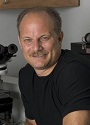
Jeffrey H. Kordower, PhD
Arizona State University
Tempe, AZ, USA
Franziska Richter Assêncio, DVM, PhD
University of Veterinary Medicine Hannover; Center for Systems Neuroscience
Hannover, Germany

Director of the Department of Experimental Neurodegeneration