



MDJ Review Article of the Year: Beyond Go and No-Go: Rethinking the Basal Ganglia



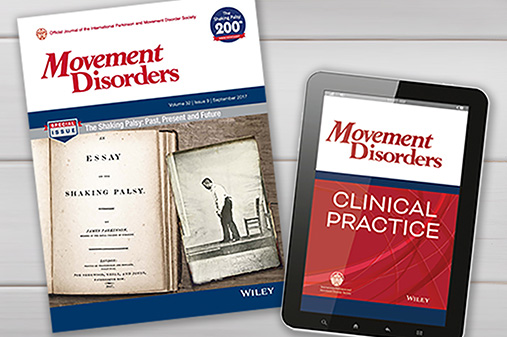
Dr. Matarazzo: Hello, and welcome to the "MDS Podcast," the official podcast of the International Parkinson and Movement Disorder Society. I'm Michele Matarazzo, and today we are discussing the paper selected as the 2026 Best Review Article of the Movement Disorders journal. It is titled "Surprises from the Basal Ganglia: Stop and Go Have New Meaning," and the author is Professor Ann Graybiel from the MIT in the US.
View complete transcript
Ann, congratulations on the award and welcome to the podcast.
Dr. Graybiel: Thank you very much.
Dr. Matarazzo: I would say that our medical students have some recurrent nightmares. When they're younger, for example, the Krebs cycle is something that we all hate. But most certainly one of these nightmares is the basal ganglia circuitry. It's so complicated, and you keep on learning and forgetting.
The direct and indirect pathways are probably among the first basal ganglia circuits that [00:01:00] every neurologist or medical students or neurobiologist learn. But as the title of this paper suggests, the familiar idea of go and no-go pathway is becoming increasingly difficult to maintain in its classical form.
So let's start with the model we all learned. The direct pathway facilitates movement, the indirect pathway suppresses movement, and in Parkinson's disease, this balance shifts toward the indirect pathway. How much of that model should we still be teaching our students and our residents today? And what remains useful?
What has become misleading of that model?
Dr. Graybiel: I think the connectivity of the basal ganglia is absurdly opaque and difficult to understand. But in fact, there are a few simplifying concepts, and one is that there's this go pathway and no-go pathway.
Many concerns have arisen about that. We don't always go and no-go. There are many [00:02:00] prodromal symptoms that don't go with movement exactly. Nevertheless, I would say that it's shocking how well the go, no-go concept has worked, even in guiding things like DBS methodologies, pharmacology, that the no-go pathway uses dopamine D2 receptor mechanisms as the no-go mechanism, and the go pathway uses the D1 receptor. And this is true. This is hardcore good material to count on.
What the problem is, is that probably the concept of go and no-go as it relates to actual movement, to action, is very impoverished compared with what these basal ganglia pathways can do.
They can affect mood. They can affect motivation. They can [00:03:00] affect reward-related behaviors. It's an enormous set of behaviors that are influenced by these pathways. So the question now, I think, is to go beyond go and no-go as simple motor command signals and that's it. And our cautionary note is that we should try to be parsimonious.
Let's not put everything in this single bag, but let's figure out specific ways other than actual physical movement that the pathways control, and I think that's where our work comes in.
Dr. Matarazzo: And in this shift going from understanding this basal ganglia purely in terms of movement. Now, as you were mentioning, there's a strong connection with, for example, reinforcement learning, decision-making, and internal state. So importantly, the effects of direct and indirect pathway activity seem to depend on what has been [00:04:00] learned and on the demands of the task.
Does this mean that go versus no-go should be replaced by a different conceptual framework? Would it be more accurate to think about these pathways in terms of selecting and reinforcing actions or behavioral policies rather than simply facilitating or suppressing movement?
Dr. Graybiel: In the non-medical field, in the basic research field, those are where the concepts are. And even they are undergoing challenge. But I personally think that the striatum, the part of the basal ganglia that gives rise to these pathways, the striatum is really crucial in the following sense: the whole neocortex projects to the striatum. There isn't a spot of our thinking cap cerebral cortex that doesn't project to the striatum. Okay, so the striatum gets all this information, and then it [00:05:00] has to send out signals in part to the motor system, in large part, or to control dopamine, which is what I'm sure we're coming to.
Now, in order to do that, a lot of decisions, shall we say, have to be made inside the striatum. Should I, on the basis of cortical input, for example, or others we might talk about later, should I do this or should I do that? It turns out that the dopamine-containing neurons, the very ones that die in Parkinson's disease, modulate these decisions.
There's the large nigrostriatal pathway that degenerates in Parkinson's disease, and I think everyone would agree that a lot of reinforcement learning depends on that pathway in one way or another. And there are many little controversies within the field about just how that works out. But, I think of the striatum as really deciding whether [00:06:00] a given behavior is worth keeping, worth storing, worth having in our repertoire.
So it becomes the great friend of behaviors that become rather automatic, that become rather habitual.
Dr. Matarazzo: Okay, so there's this shift from goal-directed to habitual, right? So you were talking about the importance of the striatum, but let me challenge you there one second, because there is also the hyperdirect pathway, which gives the cortex a rapid access to the subthalamic nucleus while bypassing the striatum altogether. How does the hyperdirect pathway fit in this story?
Dr. Graybiel: I am very happy for that question. First of all, I am a very early supporter of the hyperdirect pathway story. I kept emphasizing it when everybody was still ignoring it, and I think it's absolutely fabulous that we have -- we've got a way to just go. [00:07:00] We can go. We can get on with it. And so you leave apart this massive striatum.
It's really the largest subcortical nucleus we have in the brain. It's really big. So what is it for? I personally think it has a lot to do with learning, with plasticity, with the ability to take given inputs and then vary what we do about those inputs. We can ignore them. We can learn from them. We can incorporate aspects of those inputs into our behavioral repertoires. We can reject them. We can react as go, no-go. There are many different ways. But we need some system that, no matter what, lets us act on a cortical command, and that's hyperdirect. I'm with you on that.
So we left out, in this little article, talking about [00:08:00] hyperdirect, because it seemed a bit off topic, but I'm very glad you brought it up. And I think everybody who's listening should realize that -- I think of it as sort of a safety pathway. If a great big lion is there, your hyperdirect pathway will work.
Dr. Matarazzo: And let me now ask you about another surprise that we had from the paper. In the textbook diagram, the GPe, the globus pallidus pars externa, can almost look like a relay station in the indirect pathway, but you discuss evidence suggesting that it is much more than that, potentially a controller of behavior on its own.
What have we misunderstood about the GPe? We almost, at least from the clinical perspective, we know it exists, but we almost ignore it. Why have we done so for decades, and what is the importance of it?
Dr. Graybiel: First of all, it's like you said at the beginning, it's a nightmare, right? The whole thing. To have to consider all these different nuclei. But it's important to say that [00:09:00] the direct pathway gets its name because the outputs of this cortico-striatal system we're talking about, the outputs go directly to the motor output nuclei of the basal ganglia, and they include, principally, there's a main one, a GPi pathway, and that leads to the motor thalamus and related regions.
But then there's this other one, the other part of the GP, globus pallidus, which doesn't do that directly. So that was called part of the indirect pathway. And people ignored it. It's the D2 pathway that we're talking about. That's very important for giving a drug, isn't it? What we found, in essence, is that alongside the classical direct pathway in getting to GPe, certain striatal cells, that we'll probably come to, [00:10:00] also project directly out, but they project to the dopamine-containing neurons, not to motor nuclei. We found that a few years ago. But now what we've found is that there are other striatal cells that I'm sure we'll come to, and they project to GPe, this indirect pathway nucleus, but they have their own little private part of it.
It's quite remarkable. And it was neglected because it's hard to see unless you image the brain in certain ways. We're lucky enough to have found it. And this central zone of the GPe does a remarkable thing. It also projects directly to the dopamine-containing neurons. GPe has become a hub not only for the classical indirect nigral pathway, but also for this non-classical, newly [00:11:00] discovered pathway that influences the dopamine cells.
So what I'm trying to get across, is we've got a whole new scene. This GPe now becomes really very interesting because dopamine-containing neurons, we know, are critical for behavior. So this now becomes partly a controller of behavior that was not understood before.
And that, I hope in the end, will make the nightmare not a nightmare, but hopefully, if we learn enough about it, a dream, because we may get new therapies out of it.
Dr. Matarazzo: That would be obviously fantastic or at least an interesting nightmare, which is at least a step forward for sure. And you were already mentioning that, of course would know that my next question will be around this, what you call non-canonical direct- indirect system. So you describe the classical pathways originate predominantly from the matrix compartment of the striatum, but this [00:12:00] second system originates from the striosomes.
Could you walk us through this second system and explain what makes it fundamentally different from the canonical one?
Dr. Graybiel: Sure. It turns out that in the striatum, I said it's so huge, most of it — Well, first let me say that it's rather remarkable. It has almost all the neurons in there are input-output neurons. They get input from, for example, the neocortex, and then they project out to basal ganglia nuclei.
So they're little input-output devices, and they're influenced by local interneurons, little microcircuits in there. But think now of thousands and thousands of little input-output units. Now think one more step. They all seem to be the same by many, many measures. But then it became discovered, and I was lucky [00:13:00] enough to do that, that there are special ones that aren't like all the other ones.
How are they not like it? First of all, chemically they're not like it. Molecularly they're not like all the others. They actually were found using histochemical stains in human brain that showed the cholinergic system. And it is definitely a canonical idea in medicine and elsewhere that the dopamine system and the cholinergic system are together crucial -- partly interacting, partly competing.
Then it turned out that these special neurons, they lie in clusters that are distributed broadly within the striatum. So now let's imagine a huge ball of cells, but studded in there, almost in labyrinthine form, are these other zones. Then it turns out that these zones, that the [00:14:00] main regions, 95% of the striatum, gets input from sensory cortex and motor cortex and a lot of association cortex, which is gigantic in the human brain.
But these special zones don't tend to do that. What they tend to receive is inputs from regions of the neocortex that are either on the association side or frankly related to emotion, affect, mood and have been studied in many ways in neuropsychiatry and certainly in a lot of reward-related work in animals.
These became known as striosomes or striatal bodies. And it's these striosomes that give rise to the newly described pathways. And it was completely a surprise [00:15:00] because any given cluster is not that large. They're about a millimeter across in a human brain. And imagine that they're dotted through, and in fact, most of them are connected, so it really is a huge labyrinth in this big ball of cells.
Why would it be that the neurons in the striatum particularly link to neocortical regions that might relate to mood, for example? Why would it be that these are distributed just as though any given part of the striatum wants to know something about mood or to be influenced by it.
So one idea coming up now is that maybe, in fact, we always should have realized, and certainly physicians do, that, for example in Parkinson's, there can be mood related problems, and they can occur early.
Maybe one [00:16:00] idea is if these quote "new pathways," the newly described striosomal direct and indirect pathways as they're now known, maybe these do bring in aspects of either mood-related or cognitive kinds of influences bring to bear these influences on the classical go and no-go.
So maybe you go, maybe you don't. Maybe in one situation you can hold back or go. And maybe in the terrible position of the Parkinson's patient who's losing so many dopamine-containing neurons, these can become important. And here, I don't want to forget, at some point in this podcast to say that the known striosomal pathway that directly projects to the dopamine-containing neurons projects to the part of the dopamine-containing [00:17:00] neuronal population most sensitive in PD.
It's remarkable. The projection is to the very bottom or ventral part of that whole nigral system. And in some other work, we studied the human substantia nigra very seriously with Philippe Damier of the Salpêtrière, then under Yves Agid, well known in the Parkinson's field.
And we could identify seven zones, which we called nigrosomes. Now, in the Parkinson's field, nigrosome 1 and nigrosome 3 are being imaged as predictors of onset of PD. So it's a whole emerging story that has come out of this striatal work.
Dr. Matarazzo: Yes. Definitely all of this brings up a lot of hypotheses on, for example, the non-motor manifestations of PD or how [00:18:00] much the mood and the cognitive and the behavioral state influences the motor part also of PD.
Also with this connection to the vulnerable part of the substantia nigra, how much of this could influence the onset itself of Parkinson's. So a lot of questions, and I think there are not many answers for now, but hopefully we'll have more in the future.
But one thing that I also found surprising is that what these striosomal pathways, they do the opposite of the canonical pathways, which means that apparently the evidence that we have so far is that the striosomal D1 direct pathway reduces movement while the indirect pathway kind of increases movement.
How do you interpret that finding? Why would the basal ganglia have two parallel direct-indirect systems that appear to produce opposing effects?
Dr. Graybiel: In the end it may not be so opposite. They may be [00:19:00] partners. So if we think of the striosomal pathway as inhibitory, it inhibits the dopamine-containing neurons. But the dopamine-containing neurons are thought to be inhibitory. And so that brings release. So there may be a way to wiggle out of what seems to be an enigma by that way, in which case they're positively linked. My own particular guess is that there's a two-way street, and they can either work with or against one another, and that probably depends on the level of activity that somehow the brain considers essential.
So they could be homeostatic. One thought I had is that, gosh, if we get too much movement in a choreoathetoid disorder, for example, this other set of pathways could shush that down a little bit. And [00:20:00] if in Parkinson's there's too little movement, the alternate pathways can be energizers, which would be really good.
We need to know more about that.
The biggest mystery of late has been that striosomal indirect pathway to GPe, as you emphasized, uses D2 receptor. And you have to wonder whether there's a subtype of D2 receptor that would mark that pathway, 'cause then you could develop a drug which could selectively get at the functions of that new indirect pathway.
It would be really so good. Or we could figure out a way through stimulation to stimulate it preferentially. These are possibilities, but the non-invasive possibility would be just extraordinary. I don't know what you think about the pharmacology there, whether ever that could be [00:21:00] true.
Dr. Matarazzo: Of course, those are interesting question. Actually, I was going to get in towards the end of the interview, and my last question was exactly about that, which is moving from the mechanism to the clinic. Obviously, all of the things you're mentioning might have interesting implications for the treatment of basal ganglia disease and more specifically of Parkinson's disease, which is probably the most important one or the most frequent one.
And we know a lot of the mechanisms, but we don't know a lot of what happens if we really go deeper into the brain. So we already manipulate all these systems extensively. We give dopaminergic drugs, we give some of them that are acting specifically on D2 receptors, or we stimulate different nodes of the basal ganglia with deep brain stimulation.
But as you point out, we may have been influencing the striosomal D2 system even without explicitly recognizing it, right?
Dr. Graybiel: [00:22:00] Exactly.
Dr. Matarazzo: Do you think this neurocircuitry changes how you think about treatments that we already use in Parkinson's disease?
Dr. Graybiel: What a shame we didn't know before that when we used a D2 drug or we tried to stimulate the D2 system or indirect system, that we had this other effect. Even just knowing that's possible is going to be important.
And I want to say that the work that we did to find these circuits, that work was done in mice. The reason they weren't found is that there were no markers. We did some molecular biology, and luckily we were able to sort that out. But we need more information from, for example, non-human primates. How can you get that? We don't have the markers. We have the markers in mice. We don't have them in the monkeys. But one of the things that we said in that paper was that now there are so-called [00:23:00] enhancer methods developed by — I'm gonna make it very simple — phishing for selective gene markers of given cells. One can find genetic markers that actually can be used to influence those cells, because now, if you can find such a selective gene and gene product, then you can hook onto it molecules that let you either excite or inhibit those cells or do other things to them.
And in effect, what these enhancer methods do is let you try to discover sets of cells that have these marker characteristics. Then you can operate on them. You can turn them on and off, in a mouse. But wait, could you ever dream to have enhancers for striosomes? Yes. They're being developed.
They're not perfect. [00:24:00] Getting better. That means you can apply the operator system to work on men. Could you ever do it in a monkey?
Dr. Matarazzo: So you're saying to target cells based on their genetic fingerprint?
Dr. Graybiel: Yup. And this week, I will get together with someone who's been trying to get enhancers to work in non-human primates for striosomes. And it looks like maybe that's true, and within a week, we should know. And if that's true, then some of the research that can go on in the future can be directed toward just exactly your question, which is closer to therapeutic intervention kinds of experiments, because we can look at parkinsonian monkeys. They are beautiful models of many aspects of PD. And [00:25:00] in fact, from Spain, it has been discovered that the striosome-innervated part of the nigra does in fact die early in the monkeys and can be restored by levodopa. It's just absolutely beautiful work, stunning work. So, I can't tell you that you could alleviate non-motor symptoms of the mood type in Parkinson's patients by affecting that D2 pathway, but I sure would hope so.
Dr. Matarazzo: Fantastic. So we've been discussing for a little bit more than I was expecting, but it was so fascinating and interesting that it's, it was more than worth it. And actually I won't let you go without a last question. Going back to the title of the paper, stop and go have new meaning.
Now, most neurologists still carry some version of that classical direct-indirect pathway diagram in their heads. If you could leave them with one new mental picture of how [00:26:00] the basal ganglia works, what should replace that old stop-and-go diagram?
Dr. Graybiel: Let's add instead of replacing. Let's say we have go/no-go, but now we have modulator systems that can stop the go, can enhance the go, right? And ditto for the no-go systems, so that we have actually a more realistic system where there is real plasticity. The brain, if anything else it is, it's a system with extreme plasticity.
And in PD, a lot of that plasticity is decreased, right? Terribly decreased. So these modulator pathways, if we can manipulate them, may return some of the plasticity in the go/no-go system. So think of them as homeostatic. We've got buddies, we've got sidekicks to the [00:27:00] classic canonical go/no-go systems that we hope soon, not way in the future but soon, can be used to help therapy for PD patients.
Dr. Matarazzo: And thank you very much for joining us, and congratulations again on the recognition.
Dr. Graybiel: Oh, I thank you for the interview, and I wish everyone who hears this can learn something of value, and I just wish everyone well. Thank you very much.
Dr. Matarazzo: I'm sure that is exactly the case. Let's remind everybody that the paper is "Surprises from the Basal Ganglia: Stop and Go Have New Meaning." It was published in Movement Disorders and selected as the 2026 Best Review Article.
Thank you everyone for listening, and we'll see you in the next episode of the MDS Podcast. [00:28:00]

Ann M. Graybiel, PhD
MIT
Cambridge, USA

Neurologist and clinical researcher HM CINAC