Presidential Lecture Awardee: Stanley Fahn Award Lecture | Congress 2026



Dr. Sara Schaefer: Hello and welcome to the MDS Podcast, the official podcast of the International Parkinson and Movement Disorder Society. I'm your host, Sara Schaefer. I'm the deputy editor of the podcast, from the Yale School of Medicine, and today I have the distinct pleasure of speaking to the winner of the Stanley Fahn Award Lecture for the MDS Congress 2026.
View complete transcript
BJ Jeon is the director of the BJ Center for Comprehensive Parkinson Care and Rare Movement Disorders at Hyundae Hospital, a professor emeritus at Seoul National University, and is the chair of the local organizing committee for the International Congress in Seoul.
And this is part of the MDS Congress series. He will be giving, as I said, the Stanley Fahn Award Lecture at the Congress. [00:01:00] Congratulations Dr. Jeon, and thank you so much for joining us today.
Prof. BJ Jeon: Thank you so much, and hello everyone. It is an absolute privilege to be here on the MDS podcast today. Receiving the Stanley Fahn Lecture Award is a profound honor that leaves me deeply humbled. What makes it even more special is this year's International Congress is being held right here in my home country, in Seoul. I'm truly thrilled to share my journey, my deep personal connection to Dr. Fahn's legacy, and our latest work on GCH1 with the global movement disorder community today. Thank you for having me.
Dr. Sara Schaefer: Now, I know that this is a personal honor for you because of your relationship with Stanley Fahn. It's named after Dr. Fahn, a legendary figure, as we all know, in the field of movement disorders. You personally spent time at Columbia University as a fellow under Dr. [00:02:00] Fahn and learned a lot from him, I'm sure.
How did your time there shape your trajectory as a clinician and as a researcher?
Prof. BJ Jeon: Receiving this award is incredibly emotional and meaningful to me. My time as a fellow at Columbia University completely defined my path. Before going to Columbia, I viewed movement disorders primarily through textbooks. But working there under the immense dedication of the faculties and Dr. Fahn taught me how to look at the patient behind the disease.
Columbia was a place where clinical excellence met rigorous scientific curiosity. It taught me never to accept "we do not know" as a final answer. Every complex case we discussed at the Tuesday video rounds wasn't just a puzzle to solve. It was a driving force to take back to the lab. That precise blend of bedside [00:03:00] empathy and benchside inquiry shaped the entire trajectory of my career.
Dr. Sara Schaefer: It sounds like Dr. Fahn was a true inspiration to you, as he was for so many, and continues to be. Dr. Fahn is known for his scientific contributions, of course, and also for his mentorship of fellows and learners over many decades. How did he personally influence you as an educator, and how do you carry his guidance into your own career and how you train the next generation of learners?
Prof. BJ Jeon: Dr. Fahn had this unique legendary presence, but as a mentor, he was remarkably generous and patient. He didn't just give answers, he taught us how to think and how to ask right questions. I still remember his encouraging words when a project didn't go as planned. He taught me that failure in research is just data pointing us in a [00:04:00] better direction.
This patience was crucial for me later when diving into the complexities of GCH1 and Parkinson's disease, which required years of persistence. Now, as an educator myself in Korea, I try to replicate his legacy. I tell my fellows and students the same thing Dr. Fahn implicitly taught me, "Listen to the patient, and don't be afraid to pursue unconventional hypotheses."
Furthermore, in this current era of increasingly closed borders, I would reflect on his global perspective. Dr. Fahn always emphasized his love for training international fellows, knowing they would return to their home countries and contribute where the medical need was greater. I actively strive to carry forward his philosophy at Seoul National University [00:05:00] Hospital, where we proudly welcome numerous overseas students, including visiting Travel Grants fellows.
Passing down that torch of global intellectual curiosity and genuine care to the next generation is, I believe, the best way to honor his mentorship.
Dr. Sara Schaefer: It reminds me of something that I saw that the best scientific outcome is to not say "Eureka!" because you are confirming your own hypothesis, but to say "Huh, that's funny," and then go down the rabbit hole of exploring why something maybe didn't go the way that you thought it would.
Prof. BJ Jeon: Yes, that's correct.
Dr. Sara Schaefer: And of course, Dr. Fahn has spent his career bringing people together with the Movement Disorder Society as well, and I'm just gonna put in a little plug to one of our older episodes where I interviewed Dr. Fahn about the origins of movement disorders as a specialty and the Movement Disorder Society.
It was just a really eye-opening interview for me, and [00:06:00] I recommend that our listeners go back and take a listen. Looking back at your own journey from your fellowship days to delivering this plenary lecture, a great accomplishment and honor in your home country, no less, of Seoul, Korea, what is a core philosophy or passion that has kept you driven all of these years?
Prof. BJ Jeon: If I have to pinpoint a single core philosophy, it is the absolute primacy of clinical observation, something Dr. Fahn embedded into my DNA. I still vividly remember sitting in his Tuesday morning video rounds during my fellowship. One morning, we watched a video of a patient with dopa-response dystonia.
Seeing that dramatic, almost miraculous response to L-dopa absolutely enchanted me. It was a defining moment that has driven my research ever since. That fascination with DRD and the [00:07:00] underlying dopamine synthetic pathway is what naturally led me to my lifelong passion for the role of GCH1 in Parkinson's disease. I wanted to take that sharp clinical observation from the Columbia bedside and translate it into a meaningful theory. Standing here in my home country, Seoul, to deliver this plenary lecture, carrying a passion that was ignited in a New York video round decades ago feels like a beautiful full-circle moment.
Dr. Sara Schaefer: As someone who's been heavily involved with the International Parkinson and Movement Disorder Society, how do you view the role of global collaboration in finding the next big breakthrough for movement disorders? Bringing this not just to the education of the global movement disorders community, but collaboration on the research side.
Prof. BJ Jeon: Science simply cannot progress in isolation and requires a truly global network. In fact, my own [00:08:00] work on GCH1 and Parkinson's disease is a direct product of this international collaborative effort by working closely with global networks like GEoPD and GP2. By pooling rare cases from across the globe, we were able to have data that no single center could have alone.
This is why the MDS ecosystem is so vital. To find the next big cure, global collaboration is no longer optional, it is the blueprint.
Dr. Sara Schaefer: And our listeners are going to have to go to the MDS Congress and go to your wonderful Stanley Fahn Award Lecture in order to hear about the results of all that global collaboration with GCH1 in Parkinson's disease and other disorders. But it's so interesting to hear the origin stories of the people who are making such a difference in this field.
Do you have any final thoughts for our listeners?
Prof. BJ Jeon: My final thought would be a message to the next [00:09:00] generation of clinicians and researchers listening to this. Never underestimate the power of looking closely at your patients. As Dr. Fahn always taught us, the answer we seek in the lab almost always begins with a sharp clinical observation at the bedside.
I want to express my deepest gratitude to my extraordinary colleagues, as well as my international collaborators at GEoPD and GP2. This achievement belongs to all of us. And finally, I thank you again to the MDS, and I cannot wait to welcome you all to beautiful Seoul for MDS 2026. See you all very soon.
Dr. Sara Schaefer: I will see you there. I'm very much looking forward to it. Thank you so much, and again, congratulations Dr. Jeon on this great honor.
Prof. BJ Jeon: Thank you very much. [00:10:00]
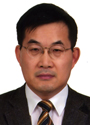
Beomseok Jeon, MD, PhD
Hyundae Hospital
Namyangju, South Korea

Yale School of Medicine