





What is it? Recurrent behavioral arrest and loss of postural reflexes
View the case videos:
KCNMA1-Related Episodes of Behavioral Arrest and Loss of Postural Reflexes
Cataplexy in Patients Harboring the KCNMA1 p.N999S Mutation



Dr. Hugo Morales Briceno: Welcome to What Is It?, a clinical case discussion podcast series. In each episode, we dissect a movement disorder case step by step, starting with a history and examination and moving through phenomenology, neuroimaging, laboratory findings, and a final diagnosis.
View complete transcript
The focus here isn't on getting to the answer quickly. It's about making expert reasoning visible. How hypotheses are formed, revised, and sometimes discarded as new information emerges. I'm your host, Hugo Morales, and in this episode, I'm discussing a case with Associate Professor Asif Doja, pediatric neurologist at Children's Hospital of Eastern Ontario, Canada.
Welcome, Asif.
Dr. Asif Doja: Thanks for having me, Hugo
Dr. Hugo Morales Briceno: Thank you. Now we'll start by reading the case for the audience, and then we'll start our [00:01:00] discussion. So this is an interesting case of a 24-year-old man who presented with a history of episodic symptoms starting in infancy. By the parents' description, the prenatal history was unremarkable.
However, his language was moderately delayed, but his motor development was close to normal. The first symptoms occurred before the age of one, when he would be sitting and have a behavioral arrest for five seconds, occurring dozens of times during the day. There was no description of tonic-clonic seizure or movement that would suggest a generalized seizure.
However, over time, the episodes became longer, usually lasting between 20 to 40 seconds. The number of episodes were counted up to 100 per day. And during the episodes, there was no tongue biting, there was no gaze deviation or incontinence. He received a diagnosis of absence seizures at the age of 11 and had a lot of [00:02:00] treatments with antiepileptics, including valproic acid, carbamazepine, ethosuximide, levetiracetam, ketogenic diet, and topiramate.
Unfortunately, none of them were effective in decreasing his episodic attacks. In terms of the attacks there was no triggering factors. The onset was abrupt. The patient, by the description of the parents is there is loss of facial expression followed by mouth opening.
He will fall to one side of his body, or will fall falling backwards with mild and normal posturing of his upper limbs with a rapid recovery again the duration of 40 seconds. Importantly, there's no other re-relevant medical history.
So with all this information what comes to your mind? Give us an approach to these cases.
Dr. Asif Doja: I think you need to take a very broad approach based on this and the description of the episodes. So you think these are paroxysmal [00:03:00] episodes and not everything, even if you're a movement disorder specialist, is going to be a movement disorder. In children, epilepsy is extremely common, and we have to think about that.
So I think it's reasonable to think, is this a movement disorder or not? And if not, what else could it be? And if it's a movement disorder, what could it be? So if not, I think epilepsy is definitely a consideration, especially at the initial history of episodes of behavioral arrest occurring many times a day.
You think, "Could this be absence seizures?" A bit unusual to start at less than a year of age, but it's still possible. But again, as you mentioned, as time goes on, they tried many treatments that should be helpful for seizures, didn't work. So perhaps that's not what's going on. So then if you think about other movement disorders that could possibly be associated. You think there's episodes of falling backwards, perhaps loss of tone.
Is this a negative phenomenon? So then you think, "Could this be myoclonus?" And as we know, myoclonus can be epileptic or non-epileptic. So epileptic myoclonus is [00:04:00] still a possibility. But if not, then we think, "Okay could this be a negative myoclonus maybe associated with a seizure disorder, maybe not?"
Again, this is a possibility. Something that occurs, for such a long period of time without a lot of other neurologic issues. You think, okay, it's not a progressive myoclonic epilepsy. That would be less likely. Myoclonus dystonia is maybe a possibility. Maybe there's some dystonia in the description of the episodes, but the episodes are quite discrete.
And a myoclonus dystonia starting less than a year may be unlikely as well. So then you think, "Okay, what about other movement disorders?" So then you think other paroxysmal movement disorders and this is possible. One important etiology to think about is GLUT1 deficiency, which can present as exercise-induced dystonia and dyskinesia, but doesn't have to.
And especially because this can onset in the first year of life and can be associated with seizures. In fact, absence seizures, if this patient does have absence seizures starting less than a year of life, is very suggestive of GLUT1 [00:05:00] deficiency. This was a consideration. You did mention, however, that they were treated with a ketogenic diet, which makes that a bit less likely since that's our standard of treatment for GLUT1.
Then the other thing we think about is what about other paroxysmal phenomenon that we see as a movement disorder? Paroxysmal dyskinesias so either kinesigenic PRT2 or perhaps non-kinesigenic. Many different causes for non-kinesigenic, but you think, especially in someone who's a child who starts with this, something like KCNMA1 is a possibility.
And then finally, there are some disorders that can present like this, which also have movement disorders. And the one we have to think about is cataplexy, with narcolepsy. Because it has been described that movement disorders, especially at the onset of disease at a very young age, you can see some very complex movement disorders with these patients.
Could that be what's going on as well? That's what I think about as a whole when I hear about this story this very interesting story for this patient.
Dr. Hugo Morales Briceno: Now I'm gonna give you the examination at the age of 24, [00:06:00] and then we will move to the video description of the episodes that this patient had. So at the age of 24, he had severe dysarthria, moderate developmental delay, no evident dysmorphic features, and the rest of the examination was normal and there were no systemic signs.
Now, I have provided you with one video and there's o-one part at the age of five, this patient had these episodes during a video EEG assessment. Now during the video what do you think is happening? How can you describe the semiology or phenomenology of the episodes?
Dr. Asif Doja: So when you take a look at this first video provided, the child is playing with his caregiver and then has this sudden behavioral arrest and this loss of tone and falls to the right side. He has some head version to the back and to the right. It's [00:07:00] difficult to see whether there's any associated eye movements.
He has some blinking during it, and you can see the examiner's trying to assess his muscle tone. Again, u-unclear whether he has increased muscle tone or not based on this. But he definitely has this posturing of his head to the right. Then quite quickly, he gets back up and resumes playing interacting with the examiner and with the caregiver.
And there's no obvious post episode or post-ictal phase from this video, and again, seems to be quite good afterwards.
Dr. Hugo Morales Briceno: There's a second video that I called from the literature. I think it's important to define how the spectrum of the semiology or phenomenology looks like. And I would like you to-- for the audience to describe what you're seeing in the second video of a different patient with the same disorder
Dr. Asif Doja: Sure. So this is a child who is playing running back and forth. Just [00:08:00] initially, you wonder if there is an issue with her gait. Her gait doesn't seem quite what we'd expect for someone her age. She's probably, four or five years old and perhaps some hesitation or some stumbling in her gait.
You wonder about perhaps some posturing of her right arm, and then she quite quickly, in the process of playing, loses tone, and falls to the ground. She's helped to the ground by her parent.
There are some mouthing movements that you see. No real e-eye deviation and not a lot of other abnormal movements other than the mouthing movement.
So there's no posturing of her limbs or anything else. She seems to be looking around during this time, and then again, quite quickly is responsive to her caregiver and begins playing again afterwards. She has a bit of tongue protrusion towards the end as she's recovering from the episode, but again, her level of alertness is quite good right afterwards.
Dr. Hugo Morales Briceno: I want to use your [00:09:00] expertise because this is interesting video assessment. If you see this patient in your clinic as in the video, w-what comes to mind to you? Is it a seizure? Or does it look something different? What would you expect with the typical, for example, myclonic seizure with a negative phenomenon? How would we expect for the things evolve during the episode?
Dr. Asif Doja: With the decrease i-i-in attentiveness and the behavioral arrest, especially in the first video with the posturing, and again, in the second video with the mouthing movement, I think you should think of seizure immediately. And I think you need to rule this out in these patients. Again, as I said, not everything is a movement disorder, even if you're a movement disorder specialist, right?
And so I think it needs to be ruled out. But then a-as you mentioned what else? And then again, we'll talk about investigations, but an EEG would be very useful in this patient. But if it's not, could it be myoclonus? This is where it becomes a bit more complicated because it could be myoclonus.
But when you [00:10:00] actually look at these videos the loss of postural tone is not an abrupt very quick phenomenon that you would see in like a negative myoclonus. This is much slower, and you have this gradual kind of loss of postural tone. So it's not wrapped enough to be myoclonus in my opinion, or a negative myoclonus in my opinion.
So it's quite unusual. Could it be a paroxysmal dystonia or dyskinesia? It's possible with the first video, but again, the second video, there's not a lot of other movements that would be consistent with a dystonia.
Dr. Hugo Morales Briceno: Yeah. I wonder if you have seen children with cataplexy, the patients I've seen only was a Niemann-Pick type C.
Who,
Dr. Asif Doja: And that's, that-- Yes, ex- exactly. So th- I have, and it was actually a patient with Prader-Willi syndrome. So Prader-Willi syndrome, Niemann-Pick type C, these are disorders, there's also isolated familiar cataplexy, that can have cataplexy without narcolepsy. So the key for this, and this could be cataplexy as we mentioned before.
It's [00:11:00] possible that these could be cataplexy. The children did seem somewhat excited in the video, so 'cause they were playing. Could that have been an emotional trigger that we would see in cataplexy with narcolepsy? But A, usually they would have an emotional trigger as mentioned. B, they should also have narcolepsy.
So that should have hopefully been elucidated on the history that they did in fact have narcolepsy as well. But you can see isolated cataplexy without narcolepsy. It is rare, as you said, in Niemann-Pick type C and other genetic disorders you can see that in. So that's also still on the differential for this patient.
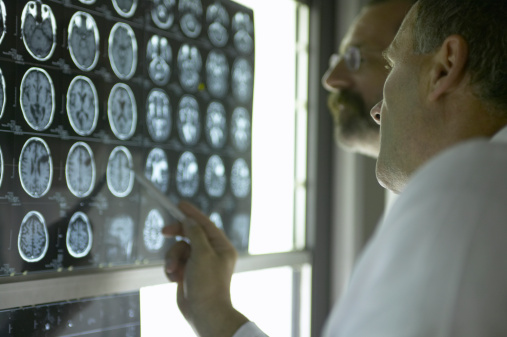
Dr. Hugo Morales Briceno: I have some results for you. So general tests include full blood count, renal, liver function tests were normal. The child had a brain MRI at the age of four and was reported normal. The video EEG during this episode, interictal EEG during awakening and sleep show a normal background rhythm with no interictal epileptic abnormality.
During the attacks, the [00:12:00] EEG activity remained unchanged and a sharp decrease in muscle activity at the deltoid myographic electrode was noticeable during the episodes, and that's it. So how these results help you in redefine your differential diagnosis?
Dr. Asif Doja: Yeah, in terms of the liver test being normal, we always need to consider in movement disorders Wilson's disease. It can cause paroxysmal movement disorder and myoclonus and other disorders similar to that. So it's possible, but that's ruled out. The MRI is also reassuring as well. The story of this patient starting at less than a year of age and continuing with episodes till 24, associated with the developmental delay, the speech issues, it makes you think that there is a genetic component.
So the MRI being normal kind of helps to reinforce that. But as you said, the EEG is very helpful. As I mentioned, you need to rule out seizures in a patient like this. And that has been clearly done with the EEG. But as well, he tried numerous anticonvulsants, as you mentioned, [00:13:00] Hugo, and then yet we don't see any improvement with this.
So I think you have to go back to everything that's been described in this patient. I would think it's either, as we discussed, cataplexy without narcolepsy is a possibility. So you may want to look into like, uh, like Niemann-Pick type C. Is there evidence of Prader-Willi? These things that we talked about before. But you did say that there was no triggering factors in this patient. Like you have like with emotion laughing as we see in cataplexy. And so I think that's less likely. You think could this be another paroxysmal phenomenon?
So this is, to me, more suggestive of the KCNMA1 mutations which can cause these kind of episodic behavioral arrests and loss of your postural reflexes.
Dr. Hugo Morales Briceno: Yeah. So this patient had a whole-exome sequencing showing a pathogenic variant in KCNMA1, as you said. And this is the most common variant reported in this condition, is the N995S, [00:14:00] which is a gain-of-function variant. Interestingly, many of these patients actually have this phenomenology or semiology of cataplexy or they may emulate or look like seizures, as you said.
It's important as a first differential diagnosis. But the treatment, I think this is important probably and you may have experience in this, but these patients can actually respond to lisdexamfetamine. For some reason, although the modified channel function, this is a potassium channel activated by calcium.
But, it seems that the reason why this patient respond to this is not known. So I think in your differential diagnosis was very accurate from the beginning just by l-listening to the story, by going through the differential diagnosis based on the phenomenology. And I think as a clinical practitioner is you need to [00:15:00] consider this possibility of it's not always easy to determine if this is a seizure or not.
Even seizures may look like movement disorders. There's studies showing that if I show you a video of a patient with seizure disorder, you may classify as a movement disorder. So it's not easy. That requires more accurate observation. I think your initial broad and then refined differential diagnosis was accurate.
And thank you again, Asif, for helping us with this case, and I hope to interview you again soon.
Dr. Asif Doja: Thanks for having me
Dr. Hugo Morales Briceno: Cheers [00:16:00]

Asif Doja, MD
Children's Hospital of Eastern Ontario
Ottawa, Canada

Neurology and Movement Disorders Unit, Westmead Hospital